.avif)



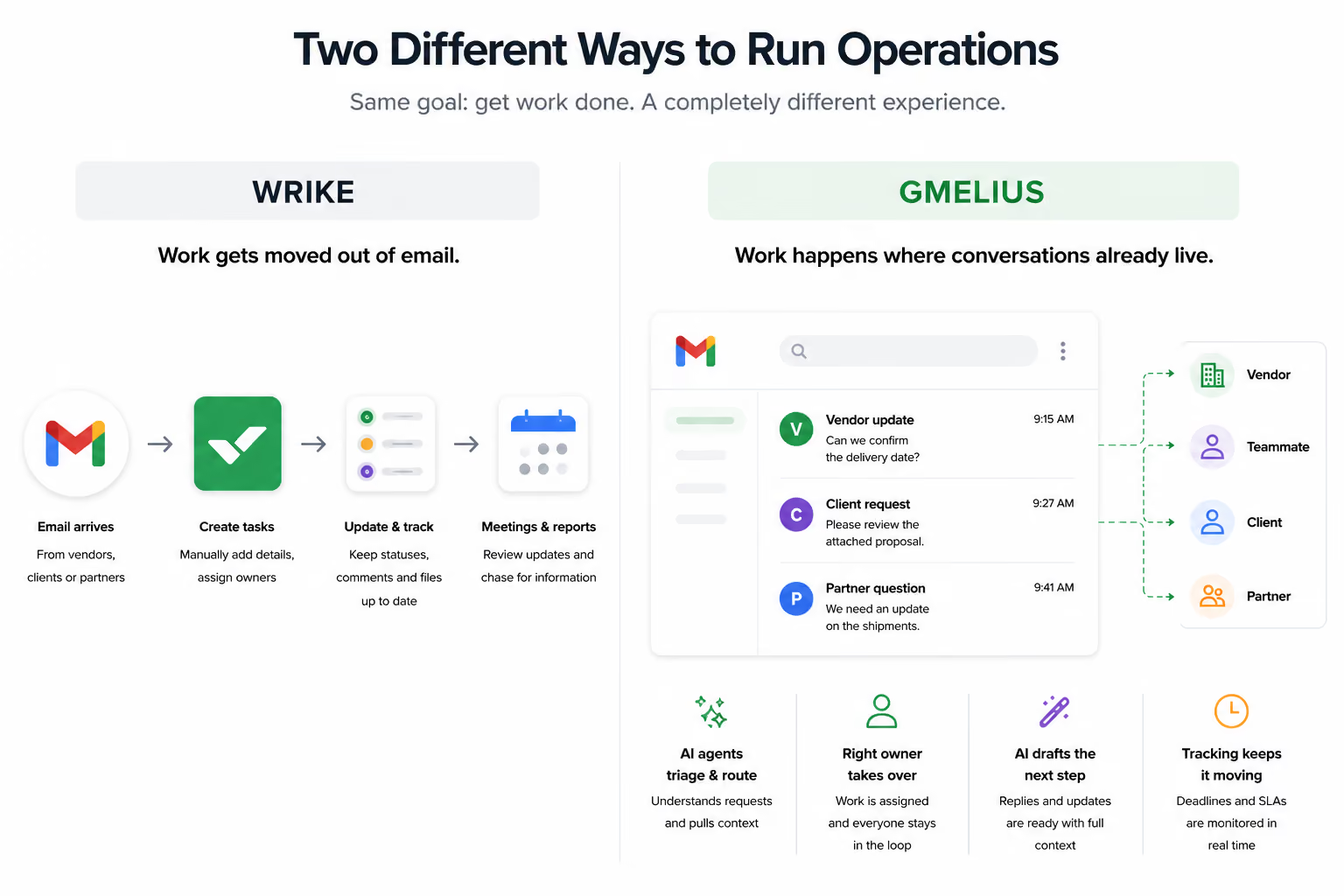
If you run operations at a 20 to 500 person company, you have probably already tried Wrike, or you are evaluating it right now against a stack of other project management tools. It is a capable platform for teams that live inside dashboards and Gantt charts. But for ops teams whose real work happens in vendor threads, client emails, and partner handoffs, Wrike often becomes another system to update rather than a system that reflects how the work actually gets done.
That gap is why so many operations leaders are searching for a Wrike alternative built around the channel they already use all day: email.
Why Ops Teams Are Looking Beyond Wrike
Wrike was designed for project management at scale: task boards, resource planning, cross-functional roadmaps. That is a strong fit for product and marketing teams tracking deliverables. It is a weaker fit for teams whose job is coordinating people, documents, and decisions that arrive as email.
The Overhead Problem
Rolling out Wrike usually means someone has to translate live email conversations into tasks, comments, and statuses inside a separate tool. For an agency account manager juggling twelve client threads, or a deal desk clearing RFPs on a deadline, that translation step is pure overhead. It does not move the work forward, it just documents it after the fact, and it often falls out of date within a day.
Work Still Happens in Email, Not in Task Boards
Vendor coordination, partner management, RFP responses, freight and logistics updates, client services requests: these workflows are multi-party by nature, and email is still the default system of record for that kind of communication. A vendor does not log into your Wrike instance to confirm a shipment date. A client does not comment on a task card to approve a scope change. They reply to an email. Any tool that lives outside that thread creates a second, disconnected record of the truth.
What to Look for in a Wrike Alternative
If your team's real bottleneck is coordination across people inside and outside the company, evaluate alternatives against three questions rather than feature checklists. The same criteria apply if Asana is also on your shortlist, as covered in this look at Asana alternatives for ops and coordination teams.
Inbox Architecture, Not Another Tool to Adopt
The strongest alternatives do not ask your team, your vendors, or your clients to change where they communicate. Instead, they add structure on top of the inbox: shared visibility, ownership, and rules layered directly onto the threads that are already happening. This is what a true inbox architecture looks like, a structured layer over shared inboxes rather than a rip-and-replace of email itself.
Automation Agents That Handle Handoffs
Static automation rules can tag or move an email, but they cannot read a contract, understand who owns the next step, or draft a reply with the right context. What ops teams actually need are automation agents: agents that triage incoming requests, route them to the right internal or external party, and keep a workflow moving without someone manually re-entering information into a separate system. For a broader look at what these agents can and cannot do compared to simple automation, see this breakdown of what are AI agents.
Context That Travels With the Work
The biggest failure mode in project management tools is losing context every time work changes hands. A new team member picks up a vendor account and has no history. A deal desk rep inherits an RFP thread with no memory of prior objections. A useful alternative needs a way to carry that history forward automatically, not rely on someone writing a handoff doc.
Gmelius vs Wrike: A Different Approach to Operations
Gmelius was not built as a project management tool competing for the same dashboard real estate as Wrike, Asana, or Monday. It was built as the operations layer for teams that run multi-party work out of email, which is a different problem entirely.
Built on Email, Not Bolted to It
Instead of asking your team to leave their inbox for a separate workspace, Gmelius turns shared inboxes into inbox architecture: structured views, ownership, SLAs, and visibility applied directly to live email threads. Vendors, clients, and partners keep emailing exactly as they do today. Nothing changes on their end.
The Four Agents Behind Every Workflow
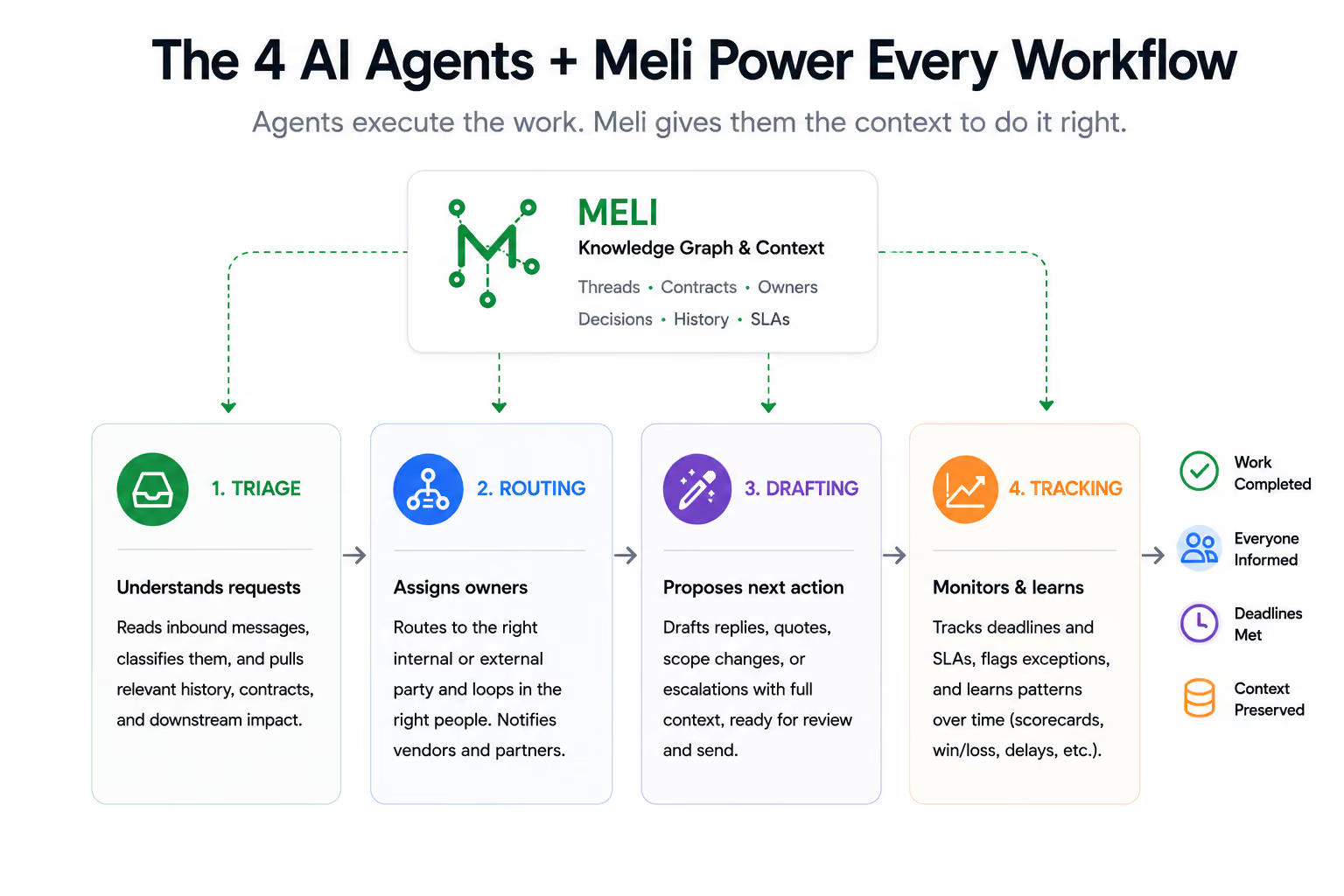
Every ops workflow in Gmelius runs on the same four automation agents:
- Triage reads inbound messages, classifies them, and pulls relevant history, contracts, and downstream impact.
- Routing assigns the work and loops in the right internal or external parties, including handoffs and outbound notices to vendors, brokers, or partners.
- Drafting proposes the next action, whether that is a reply, a quote, a scope change, or an escalation, pre-loaded with context.
- Tracking monitors threads against deadlines and SLAs, flags exceptions, and rolls up patterns over time, like vendor scorecards or RFP win-loss history.
This is closer to the agent orchestration model that platforms like Glean have popularized for enterprise search, applied specifically to email-based operations. If you want a wider view of how agent orchestration compares across categories, this overview of best AI agents is a useful starting point.
Meli: The Knowledge Graph
The differentiator is not the agents themselves. It is Meli, the knowledge graph underneath them. Meli connects every thread, contract, owner, and prior decision across your operation, so when Triage classifies a new vendor request or Drafting proposes a reply, it is working from context that a single-user AI assistant could never reconstruct from one inbox alone. That context is what makes a reply useful on the first draft instead of the fifth revision. For more on how standalone AI assistants fall short of this kind of shared context, see this comparison of AI assistants vs AI chatbots.
Where This Matters Most: Real Ops Use Cases
This approach is built specifically for functions where multi-party email coordination is the job, not a side effect of it:
- Agency account management, where one account manager tracks dozens of active client threads
- Vendor and supplier coordination, where confirmations and exceptions arrive by email daily
- Deal desk and RFP response teams, working against hard deadlines with multiple stakeholders
- Partner and channel operations, managing handoffs across internal and external teams
- Freight, logistics, and import and export coordination, where a single shipment can generate dozens of emails across carriers, brokers, and customers
None of these workflows move cleanly to Slack. None of them can be solved by a single-user AI drafting faster replies in one inbox. They need shared rules, shared visibility, and agents that understand the full thread history across every party involved.
How AI Agents Are Reshaping Operations Tools
This shift is not isolated to email or to Gmelius. Gartner projects that by the end of 2026, 40% of enterprise applications will include task-specific AI agents, up from under 5% in 2025, according to Gartner's forecast covered by Accelirate. Project management tools are not exempt from that shift, and the ones that only automate task status updates will feel increasingly thin next to tools that automate the actual coordination work. For a deeper look at where this data point fits into the broader picture, this roundup of agentic AI statistics is worth a read.
It is also part of a larger change in how people access their own data. As more work shifts toward assistants like Claude, ChatGPT, and Gemini pulling context directly from connected tools, the interface people open first will matter less than the orchestration layer underneath it. Gmelius is built for that transition, with Meli providing the connective tissue an agent needs to act with real context. You can see how this compares to general-purpose assistants in this piece on AI assistant features and this explainer on how do AI assistants work.
Bottom Line: Choosing the Right Wrike Alternative for Your Team
Wrike is a solid tool if your team's work naturally lives in task boards and project timelines. But if your operations team spends its day coordinating vendors, partners, clients, and deadlines that arrive as email, forcing that work into a separate project management tool adds a translation step your team does not need.
The right Wrike alternative for operations teams should:
- Work with the inbox your vendors and clients already use, not replace it
- Automate handoffs and routing with agents, not static rules
- Carry context forward automatically so nothing gets lost between people
Gmelius was built specifically for this problem: multi-party operations that run through email, backed by automation agents and the Meli knowledge graph that gives them real context. If your team is ready to stop managing two systems for one workflow, try Gmelius free and see what your inbox architecture could look like with agents doing the coordination work for you.


.avif)
.avif)
.avif)
%20(2).avif)
.avif)