

Every few years, a new wave of freight operations software promises to pull forwarders out of their inbox. Rate management platforms, TMS dashboards, customer portals. Each one claims to be the system of record that finally replaces email.
None of them have. Walk into any freight forwarding operation today and the inbox is still where quotes get negotiated, exceptions get resolved, and carriers, brokers, and clients actually talk to each other. The TMS holds the data, while email holds the work.
Rather than a failure of adoption, this is a structural reality of how freight operations actually function, and most freight operations software is built for the wrong layer of the problem.
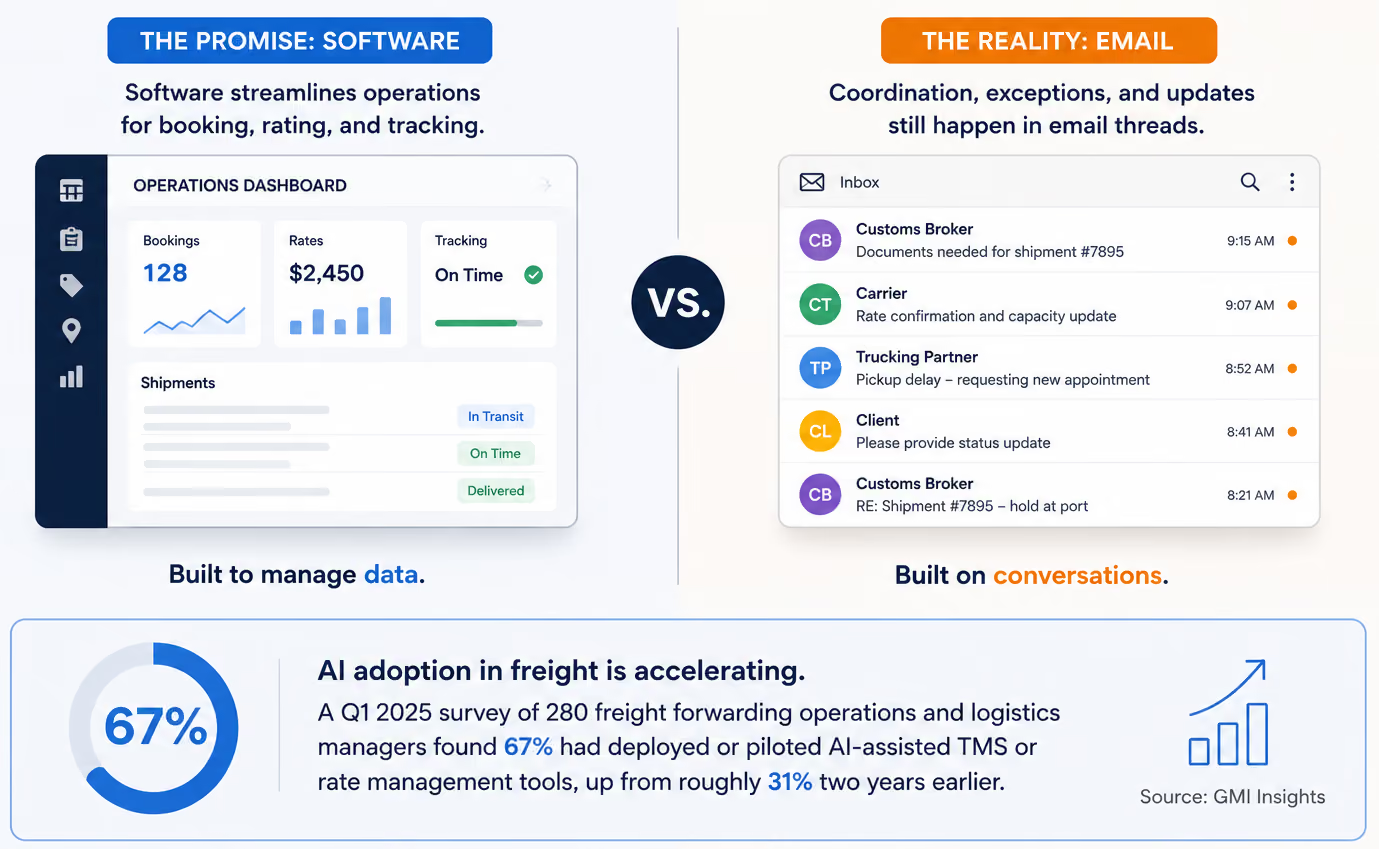
The Freight Operations Software Promise vs. the Email Reality
Freight forwarding is a coordination business before it's a data business. A single shipment might touch a shipper, a carrier, a customs broker, a trucking partner, and a client, none of whom share a login to the same platform. Digital-first platforms are automating parts of the quote-to-book process to cut down on email chains, according to Mordor Intelligence. But automating a quote isn't the same as automating a relationship.
AI adoption in freight is accelerating too. A Q1 2025 survey of 280 freight forwarding operations and logistics managers found 67% had deployed or piloted AI-assisted TMS or rate management tools, up from roughly 31% two years earlier, per GMI Insights. But the bigger shift isn't the tooling itself. As basic rate access becomes commoditized, forwarders are competing on exception handling, routing intelligence, and coordination, the parts of the job still happening almost entirely in email threads.
That's the gap. Forwarders have invested in freight operations software for booking, rating, and tracking. They still haven't solved the layer where the actual coordination happens.
Why Freight Coordination Can't Fully Leave Email
Multi-party threads nobody else owns
A rate negotiation with a carrier, a documentation request from a customs broker, and a delay notice to a client are three different conversations with three different parties, often about the same container. None of these people are going to log into your TMS. Email is the only surface everyone already has.
Contracts, rates, and exceptions live in attachments
Rate confirmations, bills of lading, customs paperwork, and accessorial charge disputes arrive as PDFs and forwarded threads, not structured records. A TMS field can't hold the nuance of a three-message back-and-forth about a detention fee waiver. Email can, and does, whether or not the software wants it to.
The people who matter most aren't in your system
Your ops team might live in a modern platform. Your trucking partner, your overseas agent, and your client's procurement lead almost certainly don't. Any tool that assumes everyone in the chain will adopt the same interface is solving for a world that doesn't exist in freight.
The Real Problem Isn't the Inbox, It's the Lack of Structure
Forwarders don't need to abandon email. They need what's missing inside it: a structured inbox architecture built for how ops teams actually work, not the ad hoc folder-and-forward system most teams are stuck with today.
An unstructured inbox forces every exception, every handoff, and every SLA to live in someone's head or in a scattered set of personal folders. A structured inbox architecture changes that by giving a team:
- Shared visibility into every open shipment thread, not just the ones assigned to them
- Automation agents that classify, route, and escalate based on shipment stage, not manual triage
- A record of who owns what, and what's overdue, without a status meeting
This is a different category of tool than a personal AI email assistant. If you're comparing options built for individual productivity, this rundown of the best AI assistants for email is a useful reference, but it's solving a different problem than multi-party freight coordination. A single-user assistant can draft a faster reply. It can't tell you that the same vendor has missed three delivery windows this quarter, or that a client's RFP terms changed mid-negotiation.
What Freight Operations Software Should Actually Do Inside Email
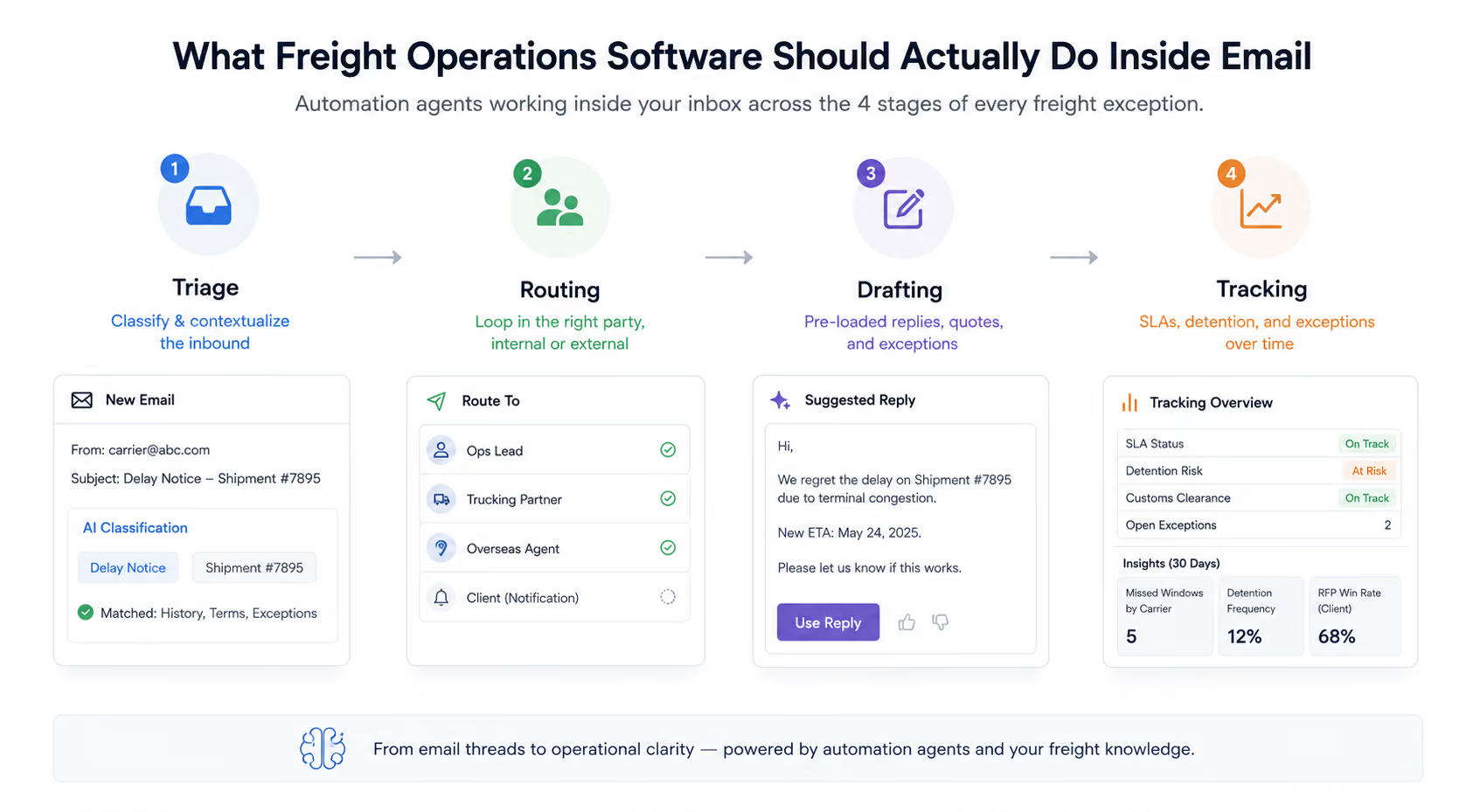
The next generation of freight operations software isn't a replacement for the inbox. It's a set of automation agents working inside it, structured around the four stages every freight exception actually goes through.
Triage: classify and contextualize the inbound
Every incoming email, whether it's a rate request, a delay notice, or a customs hold, gets read, classified, and matched to the right shipment history, contract terms, and prior exceptions automatically. This is the same underlying concept covered in what AI agents are, applied specifically to a freight ops queue instead of a generic support ticket.
Routing: loop in the right party, internal or external
Once a message is classified, it needs to reach the right person, whether that's an internal ops lead, a trucking partner, or an overseas agent, without someone manually forwarding it. Good routing also handles outbound notifications, so brokers and plants get updated the moment a status changes.
Drafting: pre-loaded replies, quotes, and exceptions
Instead of starting from a blank reply, the system proposes the next action, a quote, a scope change, an escalation, already loaded with the shipment's history and terms. Teams evaluating drafting tools broadly can see how this compares across categories in this AI email assistants comparison, though freight drafting needs shipment-specific context a generic writer can't access.
Tracking: SLAs, detention, and exceptions over time
This is where most forwarders lose visibility today. Tracking agents monitor open threads for deadlines and exceptions, and roll patterns up over time, missed windows by carrier, detention frequency by lane, RFP win and loss history by client. That pattern memory is what turns single interactions into a real operating record.
The Knowledge Graph Freight Teams Are Missing
None of these four stages work well without context, and context is exactly what most inboxes fail to preserve. A carrier's history, a client's contract terms, a broker's past delays: this information exists, but it's scattered across three years of forwarded threads and CC chains.
A knowledge graph built from that email history changes what's possible. Instead of an agent guessing at context, it retrieves the actual record: every prior rate this carrier has quoted, every exception this client has raised, every detention charge this lane has generated. That's a materially different capability than what a personal AI assistant can offer, since a solo tool only ever sees one person's inbox.
For a broader look at how this differs from consumer-facing tools, groundbreaking AI assistants beyond ChatGPT and Gemini is a useful comparison point, though none of those tools were built to reconstruct multi-party operational history the way a purpose-built freight knowledge graph can.
Building an Inbox Architecture for Freight Operations
Getting there doesn't require ripping out existing freight operations software. It requires layering structure on top of the inbox that's already the operational hub. In practice, that means:
- Defining the shipment stages and exception types that matter for your lanes, so triage has something to classify against
- Setting up automation agents for routing and escalation instead of relying on manual forwarding and reply-all chains
- Connecting the inbox history into a shared knowledge base so drafting and tracking have real context, not blank templates
Teams that have started experimenting with agent-based approaches to email workflows more broadly can find practical starting points in this guide on how to use AI for productivity, and a look at current adoption trends in agentic AI statistics is worth reviewing before committing to a rollout, since adoption in operations-heavy functions looks different than in individual productivity use cases.
The Bottom Line
Freight forwarders aren't stuck in email because they've failed to modernize. They're stuck in email because it's still the only surface every carrier, broker, customs agent, and client shares. The forwarders who move ahead over the next year won't be the ones who finally convince every partner to log into a new platform. They'll be the ones who bring structure, automation agents, and shared context into the inbox that's already doing the work.
That's the shift from an inbox that just holds messages to an inbox architecture that runs the operation, with triage, routing, drafting, and tracking working continuously in the background, backed by a knowledge graph that remembers what happened on the last shipment, the last RFP, and the last carrier dispute.
Gmelius is built for exactly this kind of multi-party, email-based operation. If your team is coordinating vendors, carriers, or clients out of a shared inbox that's outgrown spreadsheets and forwarded threads, try Gmelius for free and see what a structured inbox architecture looks like on your own freight operation.


.avif)

.avif)
.avif)