



AI agents have moved well beyond the single-user chatbot era. In 2026, the agents worth adopting for work don't just act on one person's behalf, they coordinate work between people. Whether it's a shared inbox, a shared calendar, or a shared codebase, the best ones triage what needs attention, route it to the right person, and leave a visible trail of who did what.
For teams evaluating where to invest, the sheer volume of options can be paralyzing — and most comparisons still judge agents purely on personal productivity. This roundup evaluates the best AI agents for work through a team-operations lens: how well each one supports handoffs, shared context, and accountability across a group, not just how much time it saves one person.
1. Gmelius Meli
What makes Meli stand out among the best AI agents for email is its depth of automation, built not around one person's inbox, but around a shared context and knowledge graph that spans the whole team. Meli, built by Swiss-based Gmelius, an official Google Partner, learns from every conversation across a shared inbox or mailbox, not just one user's sent folder, so its judgment reflects how the whole team actually communicates with a given customer or contact.
That shared context powers four connected capabilities rather than one:
- Triage. Meli reads and classifies incoming email by intent and urgency across the team's shared inboxes, surfacing what needs attention and filtering out noise before anyone opens it.
- Routing. Instead of relying on manual forwarding or Bcc, Meli dispatches conversations to the right teammate or queue automatically, based on content, workload, or rules the team defines.
- Drafting. Replies are generated using context pulled from the full thread history and related conversations elsewhere in the shared mailbox, so a draft reflects what a colleague already promised a customer, not just the last message.
- Tracking. Every triage decision, routing action, and draft is visible to the team, with an audit trail of who did what, so handoffs don't disappear into someone's personal inbox.This is the core difference between Meli and single-player AI email assistants: it's designed to help a team coordinate around email, not just help one person clear their inbox faster.
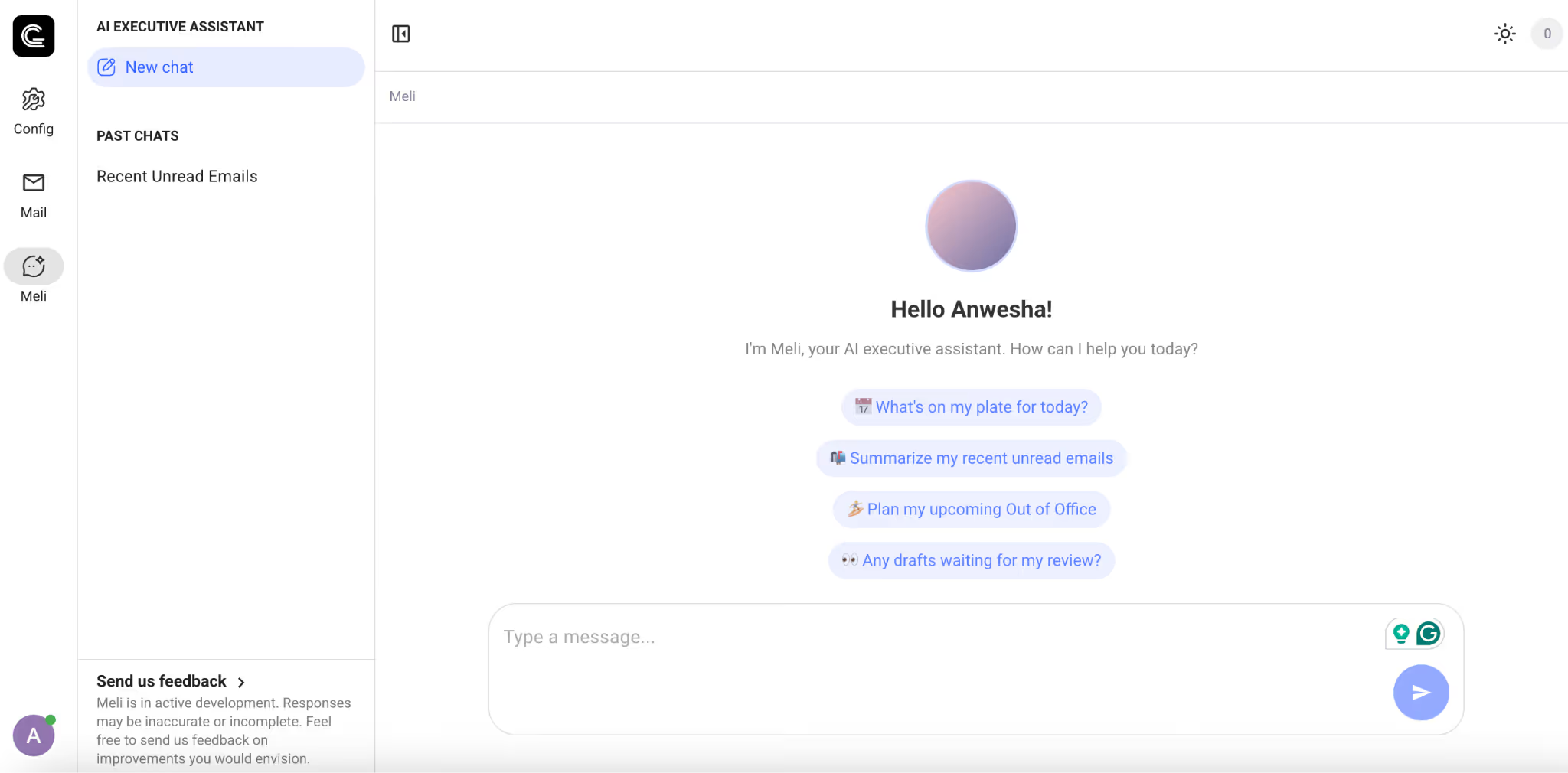
It even identifies which conversations need a meeting, proposes calendar slots based on availability patterns, and sends the invite with one click.
The Meli Plan starts at $19/user/month, and advanced features like conversational chat and shared-inbox routing aren't locked behind enterprise-only pricing — a rarity among tools built for collaborative workflows.
2. Lindy AI
Lindy AI is a no-code agent builder that lets customers create autonomous "digital employees" for tasks like email triage, CRM updates, lead qualification, and meeting prep. Founded by former Uber Head of Product Flo Crivello, the platform operates on an "Ask, Act, Anticipate" framework, where agents don't just respond to prompts — they reason through multi-step workflows and self-correct when something goes wrong.
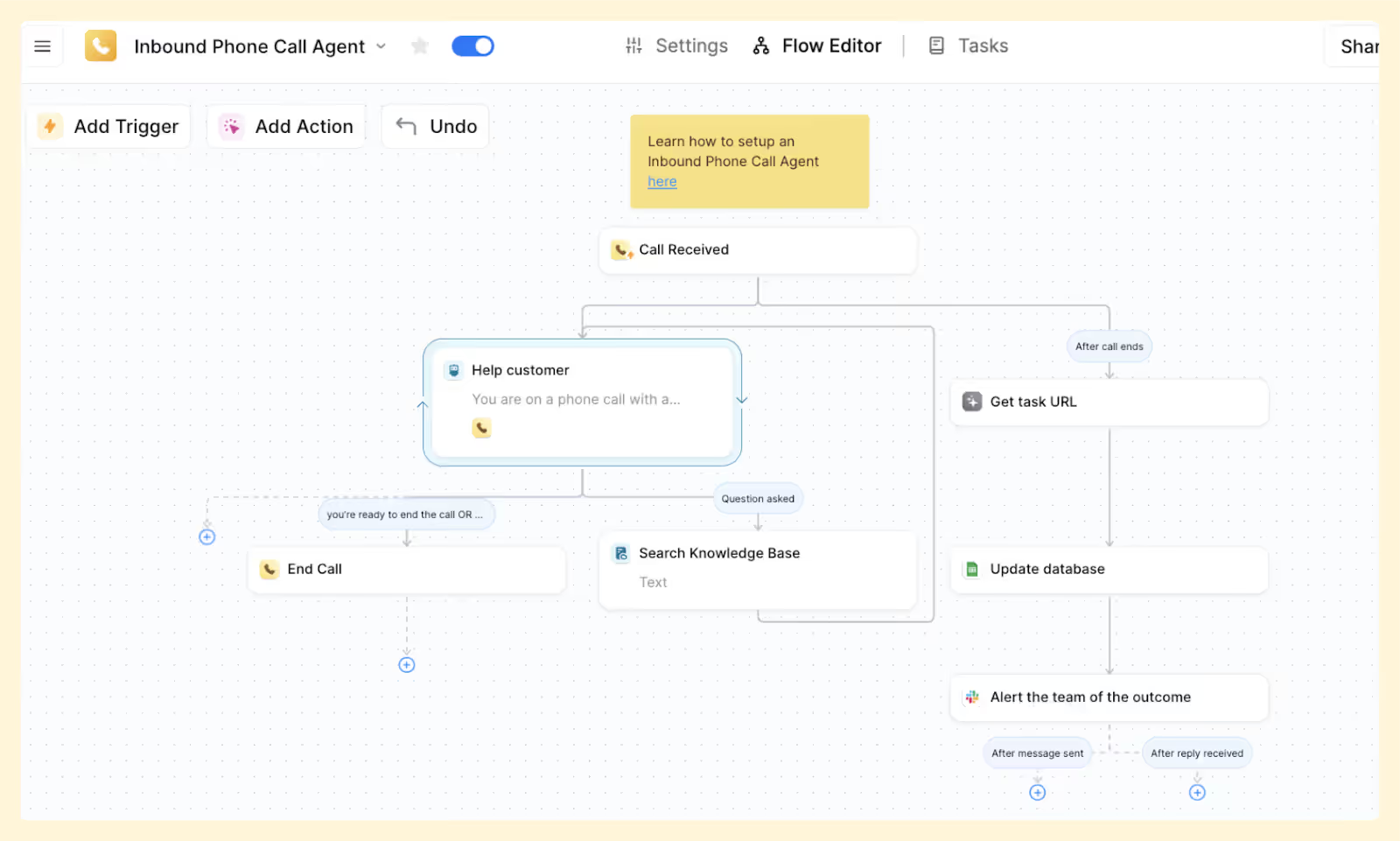
Lindy supports multiple LLMs, including Claude Sonnet 4.5 and GPT-5, and integrates with over 5,000 apps through Pipedream Connect. A free plan offers 400 credits monthly; paid tiers start at $8/month.
3. Reclaim.ai
Reclaim.ai is an AI scheduling layer that sits on top of Google Calendar and Outlook, using priority-based logic to defend focus time, auto-schedule tasks, and optimize recurring meetings. Users assign priority levels from P1 (critical) to P4 (low) across all calendar events, and Reclaim continuously reshuffles the schedule as conflicts arise.
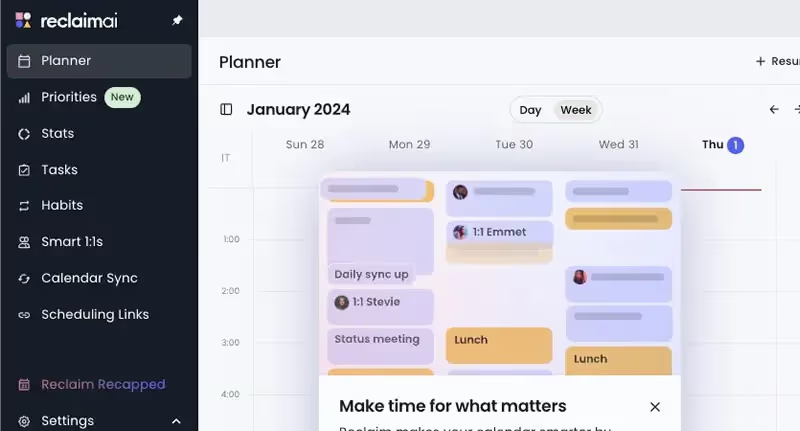
The platform reports that customers reclaim an average of 7.6 hours per week. Key features include:
- Focus Time defense that proactively blocks deep-work windows and adjusts as calendars fill up
- Smart Scheduling Links that surface 524% more availability than static free/busy tools
- Calendar Sync across multiple accounts with granular privacy controls
Pricing starts with a generous free-forever Lite plan; the Starter tier costs $8/user/month.
4. Gemini's Agentic Capabilities
Google's Gemini has crossed 750 million monthly active users and is rapidly evolving from a conversational assistant into a full agentic platform. The March 2026 Pixel Drop introduced Gemini App Actions, allowing the agent to execute tasks — ordering groceries, booking rides, managing smart home devices — across third-party apps using natural language commands.
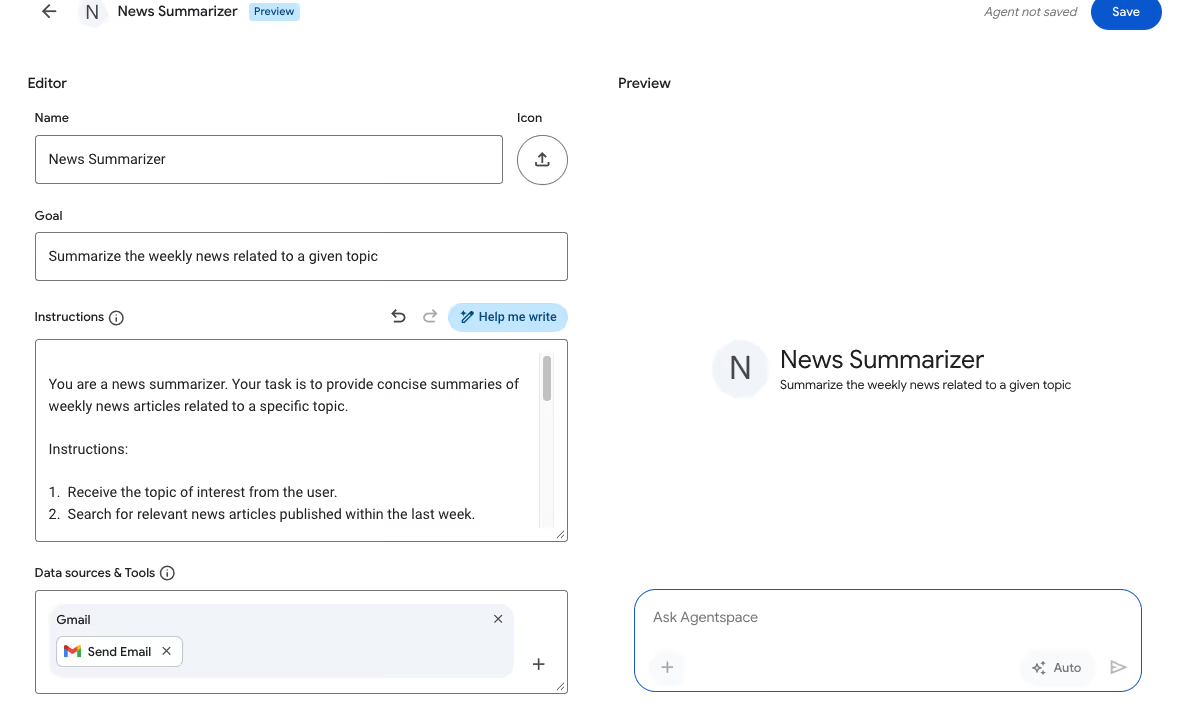
On the enterprise side, Gemini 3 Pro delivers state-of-the-art reasoning with powerful multimodal understanding, while the Gemini API processes billions of requests monthly. For consumers, the best AI agents from Google operate at the OS level on Android, giving Gemini deeper app access than web-only competitors.
AI Pro subscribers pay $19.99/month; the Ultra tier at $249.99/month unlocks the highest agentic capabilities.
5. Cofounder
Cofounder takes a different approach to the best AI agents category: rather than automating a single function, it plugs into a user's existing tools and writes automations across the entire stack. Describe a workflow in plain English — monitor Linear for completed issues, compile release notes, email a Monday summary — and Cofounder handles it.
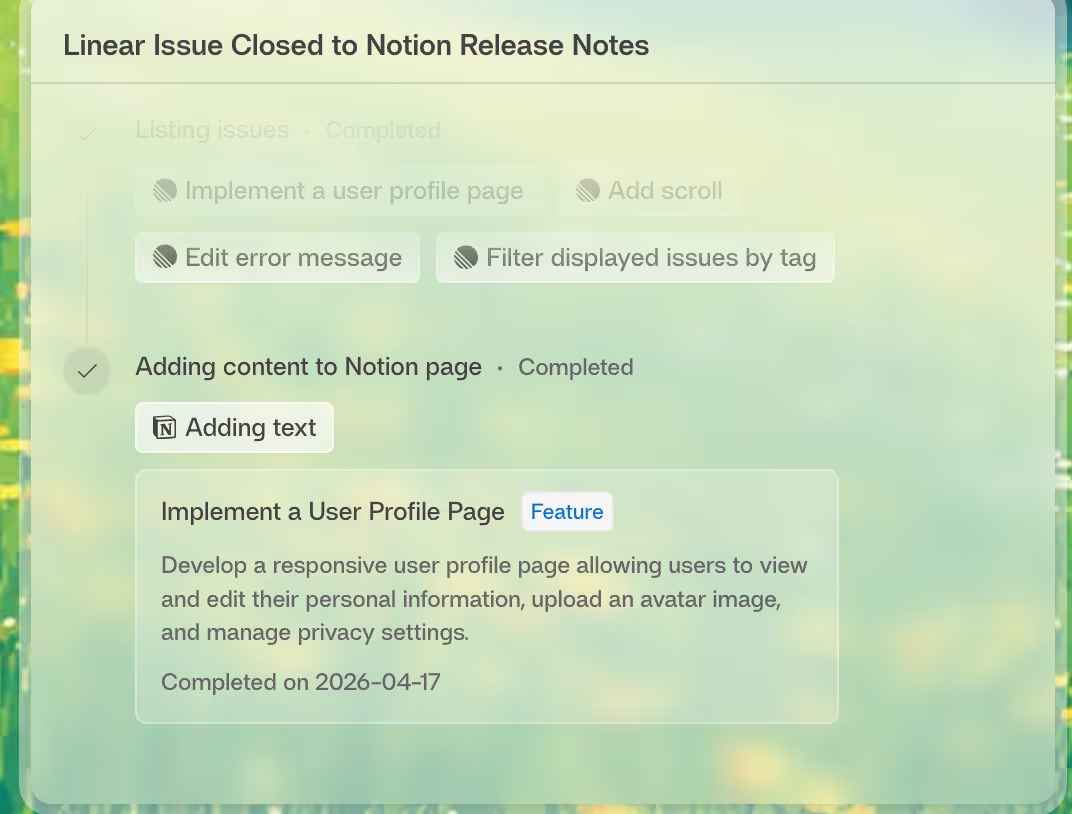
The platform is especially popular with solo founders and small teams. Users can kick off tasks, review notifications, and approve or reject agent work from a central dashboard.
Testimonials highlight significant time savings in coordination-heavy work like scheduling user interviews and managing day-to-day ops. Everything can be adjusted on the fly using natural language.
6. Replit Agent
Replit Agent turns natural language prompts into fully deployed web applications — frontend, backend, database, and hosting included. With the new Agent 4 now out, the platform can work autonomously for up to 200 minutes per session, testing and fixing its own code in a reflection loop.
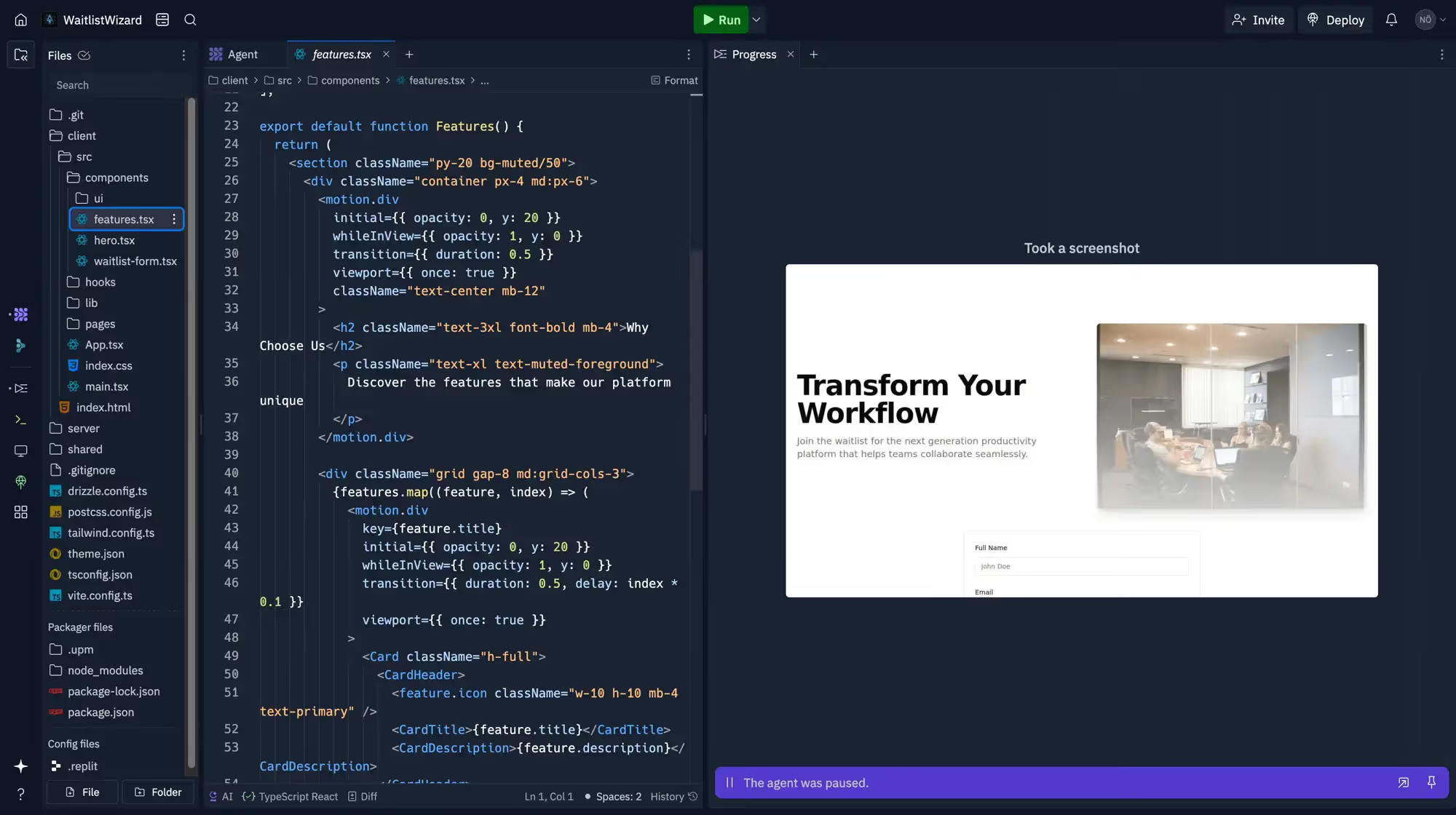
In January 2026, Replit raised $250 million at a $3 billion valuation, tripling its 2023 figure. Key capabilities include:
- Zero-setup deployment — every project gets a live URL instantly, with no CI/CD configuration required
- Multi-user collaboration — real-time editing similar to Google Docs for code
- Design Mode — creating interactive designs that auto-generate the underlying codebase
The Core plan runs $25/month; Pro costs $100/month. Replit Agent is among the best AI agents for non-technical founders who need functional prototypes fast.
7. Zivy App
Zivy acts as a priority inbox for Slack, filtering through message noise and presenting only what actually requires attention. The AI categorizes every message into three buckets — Action Items, FYIs, and Others — then ranks them by importance and urgency based on the user's role and context.
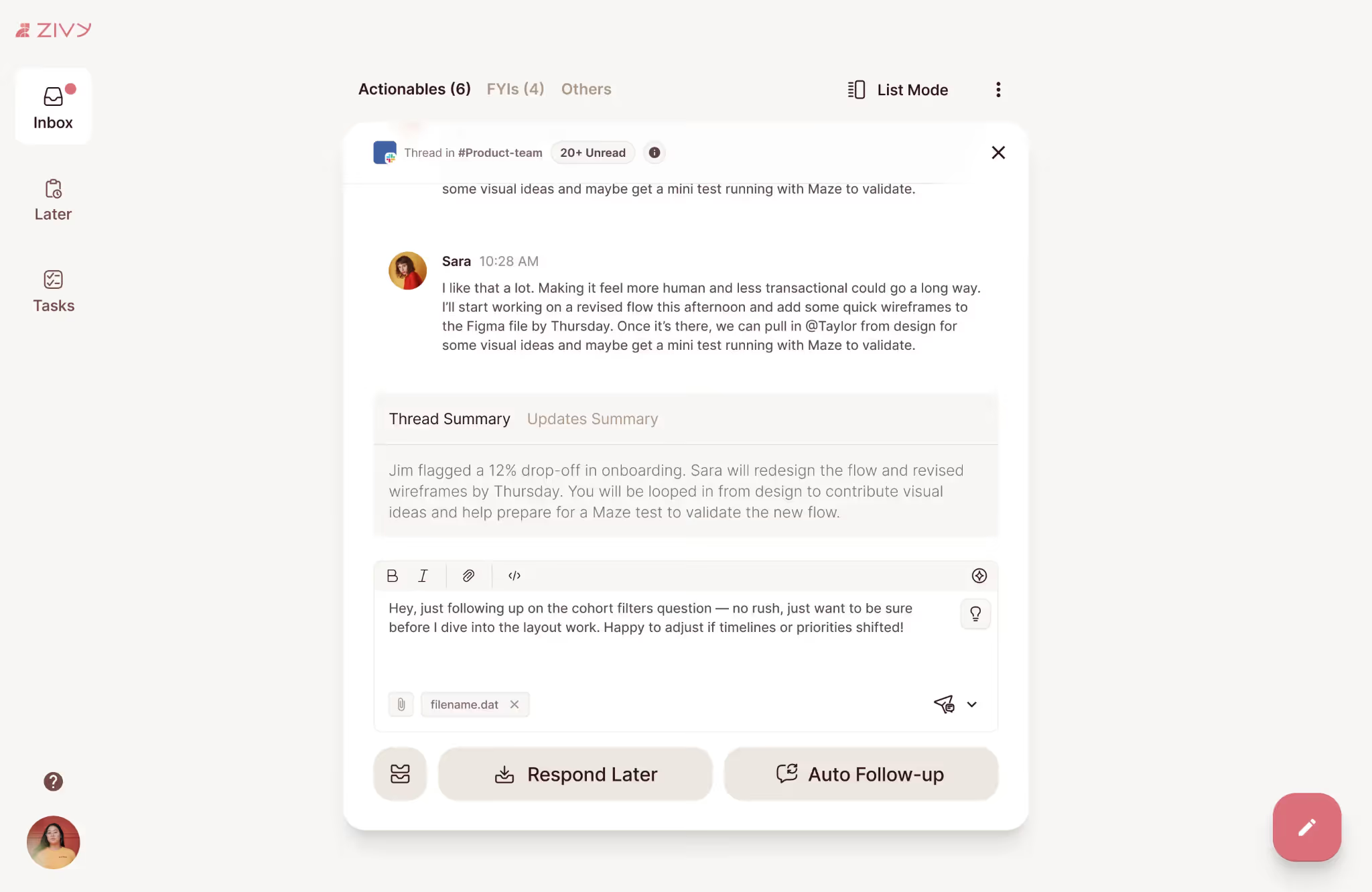
The feature set is laser-focused on reducing communication overload for managers and team leads. Automatic follow-ups track pending requests and nudge recipients when responses are overdue.
AI-generated thread summaries condense lengthy Slack conversations into digestible key points. Instant reply drafts, written in the user's voice, cut response time from minutes to seconds. One-click scheduling pushes action items directly to Google Calendar.
8. Saner.ai
Saner.ai is a personal knowledge management tool with an AI assistant called Skai that organizes notes, tasks, and ideas without requiring manual filing. Users capture information through voice, text, or web clipper, and Skai auto-tags it, connects related ideas, and surfaces relevant notes when they're needed later.
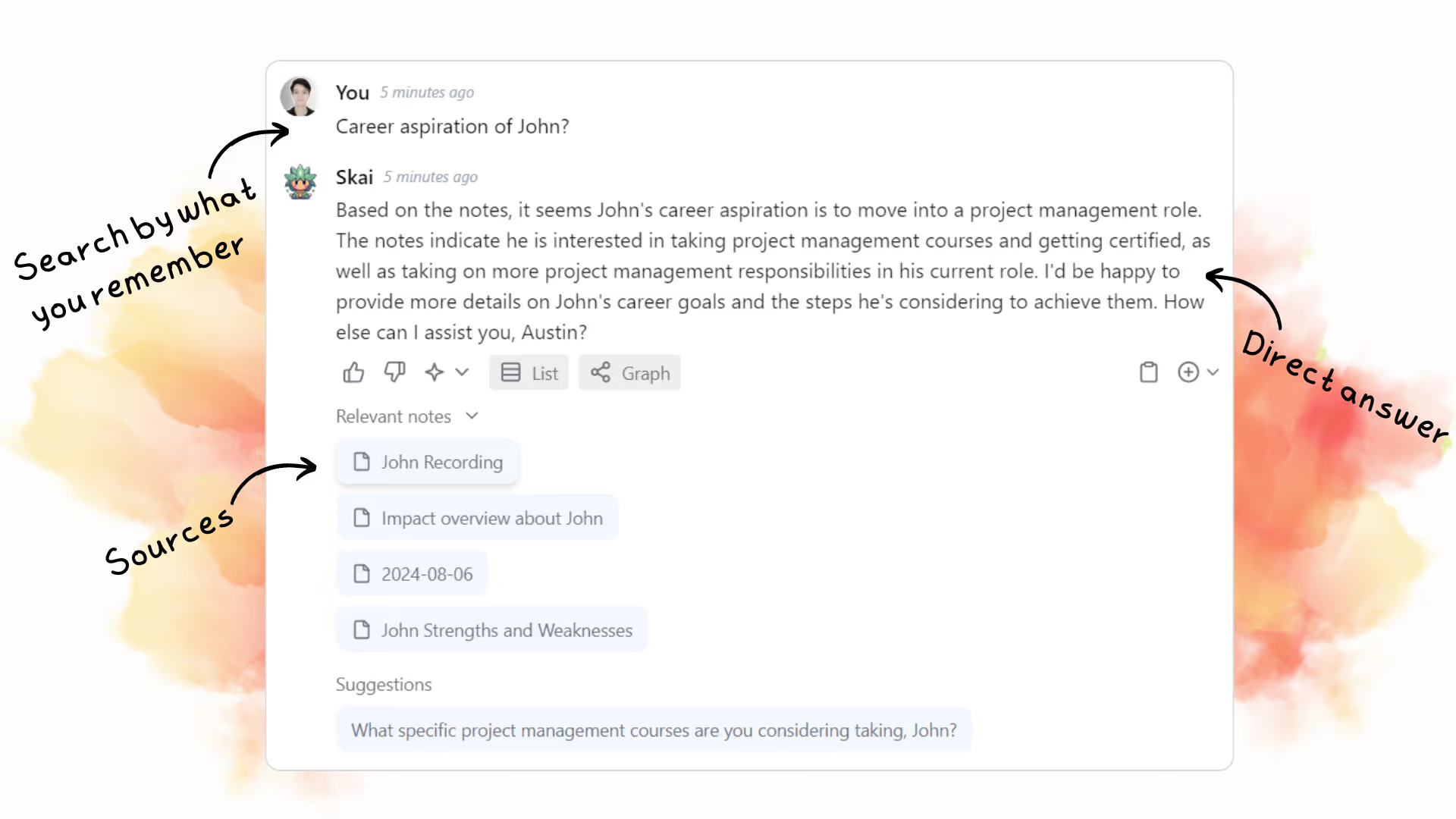
Originally designed for knowledge workers with ADHD, the platform's calm, distraction-free interface has found a broader audience among entrepreneurs, researchers, and content creators. Saner integrates with Gmail, Google Drive, Slack, and calendars, centralizing scattered information into a single searchable system.
Semantic search lets users find notes using natural language, even when exact keywords are forgotten. Among the best AI agents for personal productivity, Saner stands out for helping users think — not just organize.
9. AirOps
AirOps is a content operations platform built for SEO and marketing teams that need to scale production without sacrificing quality. The platform connects AI search visibility data, traditional SEO metrics, and engagement analytics into a unified dashboard called Page360, then uses AI-powered workflows to turn those insights into published content.
What sets AirOps apart is its systematic approach:
- Power Agents handle repeatable tasks like SERP analysis, content brief creation, and competitive gap audits
- Brand Kits and Knowledge Bases ensure every AI-generated draft stays on voice
- Direct CMS integrations with WordPress, Webflow, and Shopify push approved content live without manual handoffs
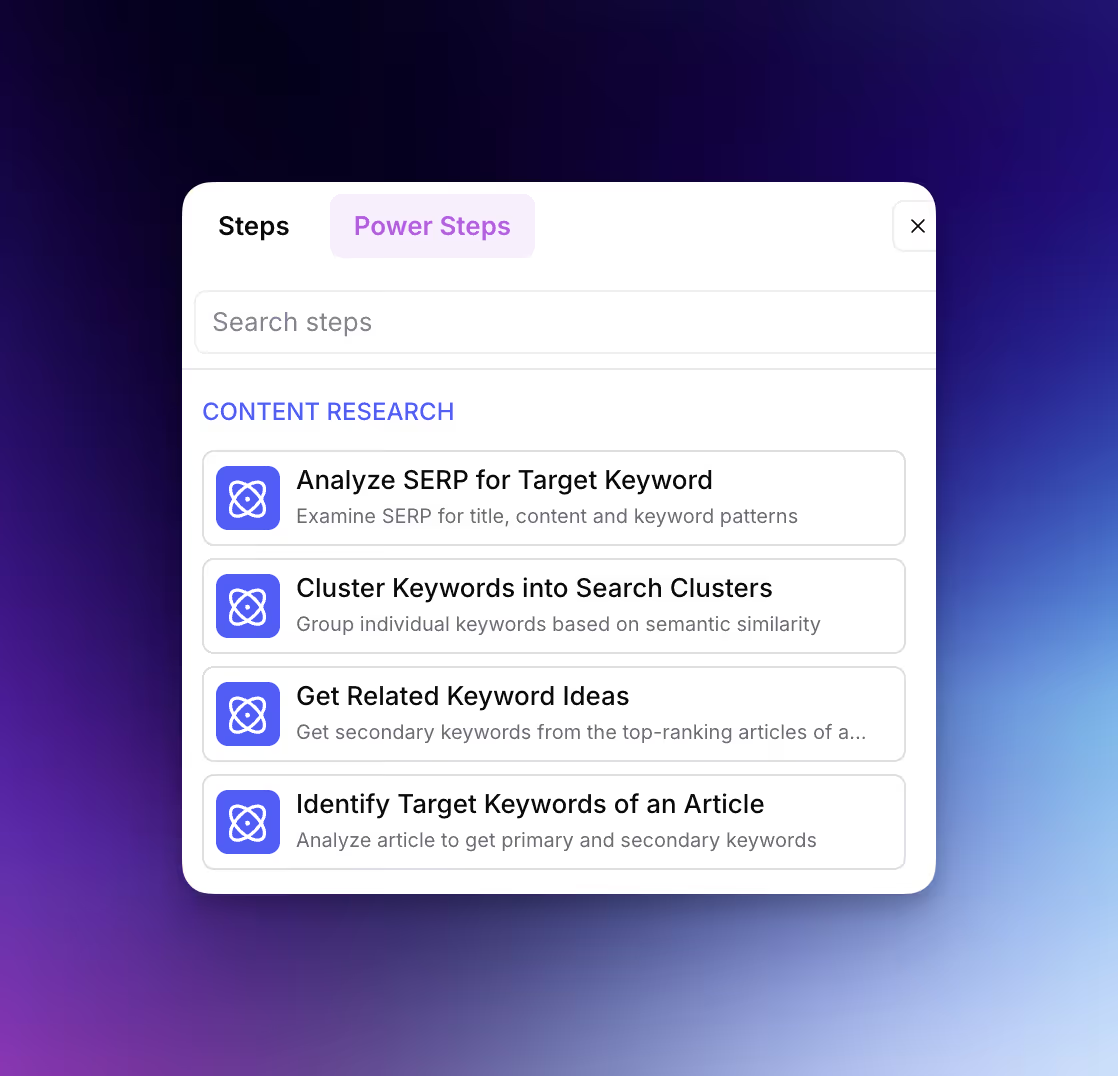
Companies like Webflow, Ramp, and Descript use AirOps to manage large-scale content programs. The platform is best suited for teams already producing significant volume that need to 10x output while maintaining editorial standards.
10. ChatGPT Agent Mode
OpenAI merged its Operator browser agent and Deep Research capabilities into ChatGPT Agent Mode, creating one of the best AI agents for general-purpose task execution. Agent Mode launches a sandboxed virtual computer where it can browse websites, fill forms, run code, generate spreadsheets, and interact with third-party services — all while users watch in real time.
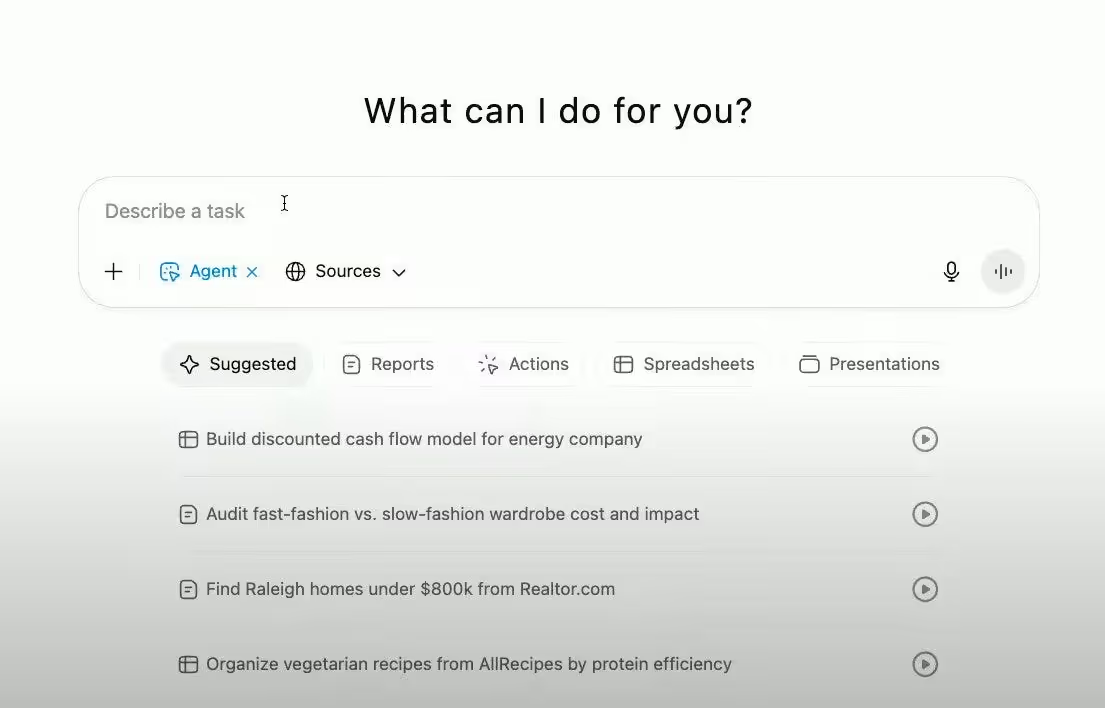
Powered by a model in the o3 family, the agent maintains context across entire workflows and self-corrects when results don't match expectations. Tasks typically complete within 5–30 minutes.
Safety features include user confirmations before high-impact actions, prompt injection monitoring, and a "watch mode" for sensitive sites. Agent Mode is available on Plus ($20/month), Pro ($200/month), and Team plans, with monthly message limits varying by tier.
11. ClickUp Super Agents
ClickUp Super Agents are AI-powered teammates that live inside the ClickUp workspace, operating with episodic, short-term, and long-term memory. Unlike standalone AI tools that lack project context, Super Agents understand a team's naming conventions, client history, and standard processes — then act accordingly.
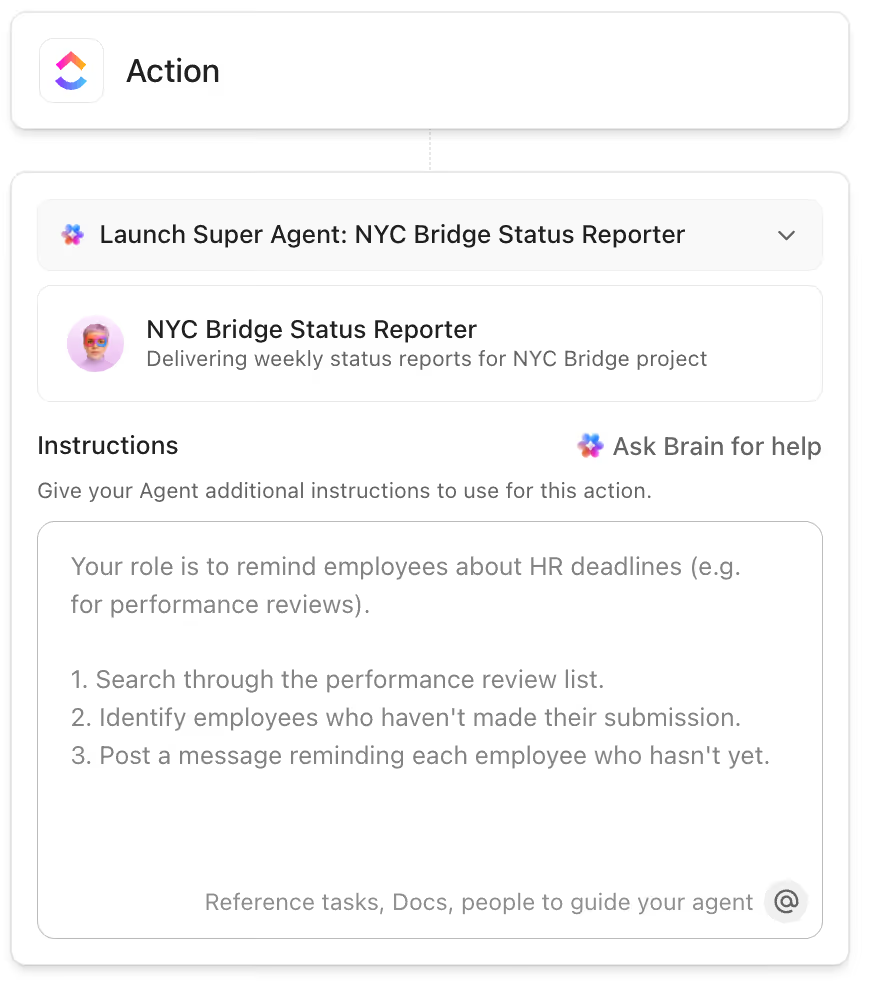
Customers can create custom agents or entire agent teams in minutes using natural language prompts. Super Agents can be assigned to tasks, @mentioned in conversations, and instructed to collaborate with each other through multi-agent orchestration.
The best AI agents for project management need deep workspace awareness, and ClickUp delivers that by embedding intelligence directly into the tool teams already use. Brain AI starts at approximately $9/user/month on top of existing ClickUp plans.
What Defines the "Best" AI Agents for Team Email Operations
The best AI agents in 2026 for team settings share traits that go beyond what makes a good personal assistant:
1. Shared context, not per-user memory. An agent that only remembers your past emails helps you. An agent that understands what your teammates have already said to a customer helps the team. The strongest agents build context across every mailbox they touch, not just one.
2. Triage and routing, not just drafting. Personal AI assistants optimize for "what should I answer first." Team-oriented agents need to decide who should answer at all, classifying incoming email by intent and dispatching it to the right person or queue before a draft is ever written.
3. ,Visible handoffs. When an agent moves work between people, someone needs to see it happen. The best agents leave an audit trail (who was assigned, who drafted, who approved, who sent) so nothing gets silently duplicated or dropped.
4. Workflow orchestration across a group. Booking one meeting or writing one reply is single-player automation. The more useful benchmark is whether an agent can execute a workflow that spans multiple people's inboxes and responsibilities.
5. Guardrails and permissioning at the team level. Individual guardrails ("ask before sending") aren't enough when multiple people share ownership of a conversation. The best agents support role-based permissions and approvals, not just personal confirmation prompts.
Making AI Agents Work for You
The gap between experimenting with AI agents and building them into daily operations comes down to one thing: specificity. Customers who see the biggest productivity gains start with a single, well-defined workflow — inbox triage, content refresh, calendar optimization — and expand from there.
The tools on this list cover a wide range of use cases, but the common thread among the best AI agents is that they eliminate repetitive coordination work so humans can focus on judgment and strategy.
For teams running on Gmail and Google Workspace, Gmelius's Meli is a strong starting point — try it free and see what an AI executive assistant can do for the daily workflow.


![What Are AI Agents? [Updated Guide for 2026]](https://cdn.prod.website-files.com/6737568a4ac417efeb387e5a/69cb892aa2e07a092071c0e0_Curiosity%20and%20Discovery%20(1).avif)
.avif)
.avif)
.avif)
.avif)
.avif)